
Posts with tag 'DeltaNet'
Subscribe and receive email notifications of new blog posts.
 RSS Feed
- 2026 | 71 Posts
- 2025 | 96 Posts
- 2024 | 114 Posts
- 2023 | 143 Posts
- 2022 | 188 Posts
- 2021 | 204 Posts
- 2020 | 190 Posts
- 2019 | 118 Posts
- 2018 | 122 Posts
- 2017 | 164 Posts
- 2016 | 95 Posts
- 2015 | 68 Posts
17
DeltaNET® 7: The Next Generation of Real Estate Technology Is Here
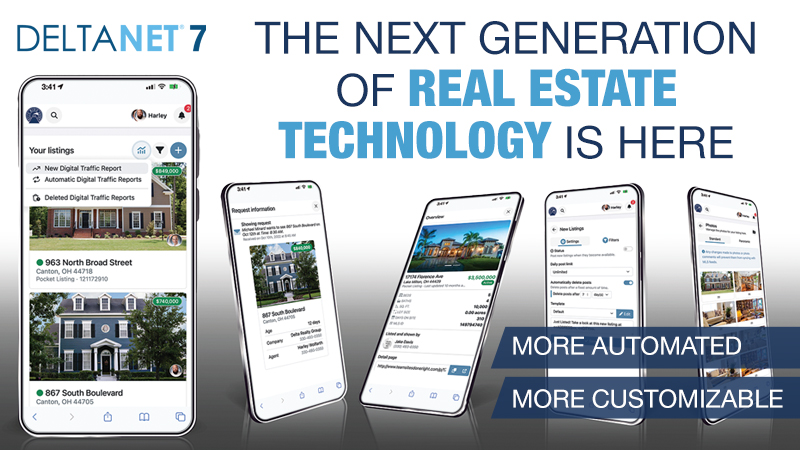
The #1 real estate CRM has never been more simplified, more automated, or more customizable.
Just as your iPhone or MacBook needs an upgrade every few years, so does your CRM. Give your tech platform an upgrade with DeltaNET 7, the all-in-one solution made simple for all agents, no matter their tech level.
13
Tech Dependability Is Key To Success

Real estate technology is evolving faster than ever before in recent years due to the unique challenges posed by the pandemic, the rapid advancement in AI-driven technology, and the forward-thinking nature of an industry that's always searching for more effective, efficient ways to serve clients. With so much tech available, it can feel difficult to decipher which tools will deliver the best results for you or your team.
One way to cut through the noise is to focus on tech dependability. Which tools work best right now while still being likely to continue to add value and maintain momentum well into the future? By focusing on dependable tech, you can spend less time learning to use every shiny new toy that comes onto the market and more time reaping the benefits of integrating the most reliable tools into your daily routine.
The Searc...
11
Building Your Brand Is More Than Marketing

Marketing is an incredibly important part of building your real estate brand.
But it's not the only part.
In fact, plenty of work developing your brand happens before you're truly in the swing of marketing. To craft a consistent brand, you need to start with a vision of exactly what you want the brand to stand for.
Over time, your vision will change and grow. Likewise, your brand will also be influenced by customer interactions and their outcomes. After all, a brand isn't something you can control completely from the top down. It's also made up of what your customers believe about you, and that is always unfolding.
When your brand has a clear purpose and direction, though, it is much easier to attract the customers...
6
Catering To Customers Of The Digital Age

The digital age has forever changed the real estate industry for both customers and agents. Modern real estate customers tend to be tech-savvy, with a strong motivation to conduct independent research, learn everything they can about buying/selling a home, and discover promising properties in their target markets before they even connect with an agent.
On the agent side, you have a more diverse, dependable technological toolkit than ever before for attracting those customers, helping them achieve their real estate goals, and saving you tons of time in the process. Catering to customers of the digital age starts with having a plan and integrating the right tools for the job.
Start with Your Real Estate Website
4
The Easiest Way To Connect With Your Clientele

Real estate is all about connections. Your marketing, including digital and in-person, needs to bring in a constant stream of people you can help. At the same time, you should have a strategy in place to remain connected to customers who've had positive experiences with you in the past.
While the majority of people say they were satisfied with the help their real estate agent gave them, few report using the same agent twice. Some certainly end up moving out of their old agent's service area. Mostly, though, the reason is very different.
They simply forget their previous agent's name.
Heading off the Real Estate "Amnesia Effect"